
Planning together
Share the packing list instead of writing it four times
Four people, four packing lists, three stoves and no extension lead. Why a shared list is less work — and what belongs on it, and what does not.
Published Reading time 6 min Updated
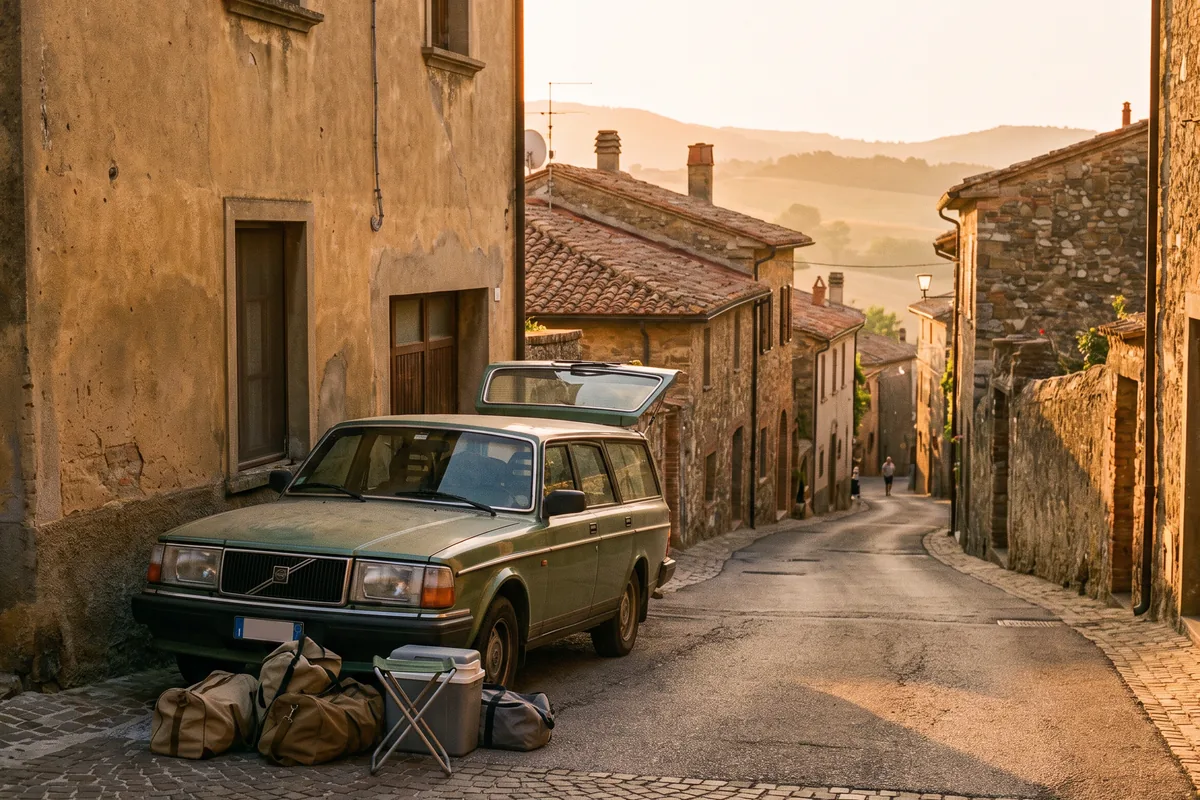
There is a moment on every group trip that repeats itself reliably: you are standing at the pitch, and there are three stoves. But no extension lead, no washing-up bowl, and the first-aid kit stayed at home because everyone assumed somebody else was bringing one.
That is not carelessness. It is because four people wrote four separate lists — and each of those lists answers only one question: what am I taking? None of them answers the question that matters: what does the group need, and who is bringing it?
Two kinds of thing that do not belong on the same list
The whole trick consists of keeping these two apart. They look alike and behave entirely differently.
Personal things — toothbrush, rain jacket, medication, charger. Every person needs their own. If somebody forgets it, that affects only that person. This list is essentially the same for everyone and can be written once and reused forever.
Shared things — stove, tent pegs, maps, cool box, tools, first-aid kit, washing-up liquid. Of these the group needs exactly one (or a particular number). If nobody brings it, that affects everyone. If three people bring it, space is wasted that is expensive on a trip with a luggage limit.
The mistake that produces the three stoves is always the same one: shared things sit on personal lists. There they cannot work, because none of those lists knows what is on the others.
What a shared list has to be able to do
A shared packing list is not a shared document. A shared document is a list everyone can see — and that is precisely not enough.
Three things make the difference:
Every item has a name beside it. Not just a tick, but "stove — Jonas". Without the name the tick only says that somebody ticked it off, and on the day of departure nobody dares ask any more.
Open items look different from settled ones. What nobody has taken on has to catch the eye. A list on which open and settled look alike does not get read, it gets skimmed.
It lives in the same place as the rest of the planning. A packing list in a different app than the route is a list that has to be searched for again three days before departure. If it sits with the trip's portal, it necessarily turns up whenever somebody looks at the trip.
A structure that has proved itself
Four blocks are enough, and the order is not arbitrary — it runs from "affects everyone" to "affects only me":
- Vehicle and safety. High-visibility vest, first-aid kit, tools, spare fuses, tyre pressure gauge, tow rope. Depending on the country, some of this is mandatory — that belongs looked up, not guessed.
- Shared equipment. Stove, gas cartridges, cool box, washing-up things, extension lead, head torches, maps. Here a name belongs behind every item.
- Provisions. What gets bought in advance and who gets it. The item most frequently bought twice.
- Personal things. One template for everyone, which each person ticks off for themselves.
The most important block is number 2, and it is the only one that really has to be maintained jointly. The other three are convenience.
Three things that are regularly forgotten
Not because they are exotic, but because they appear on no standard list:
The charger for that one device. Camera, e-bike, CPAP machine, drone. Each of them has its own cable, and none of them appears in a generic packing list.
Papers that belong to the vehicle. Registration document, proof of insurance, for outfits the 100 km/h certificate, in some countries the green card. The least replaceable, the most frequently forgotten.
What is already at the destination. The reverse mistake: if the holiday flat provides towels and the campsite has electricity, that saves boot space — but only if somebody wrote it down. Otherwise everyone brings some to be safe.
Why this belongs with the planning
A packing list is the last step of planning a trip and is nevertheless almost always kept separately — in a notes app, a group chat or on paper. Yet it hangs directly off the decisions before it: whether you need a stove depends on whether you are camping. Whether towels have to come depends on the accommodation. Whether rain jackets are necessary depends on the time of year.
If the list lives in the same place as the trip itself, with the same people and the same status — who has it, what is still missing — then it is not an additional document but the end of the same plan. And then it is still there three days beforehand, where everyone would look for it.
What the planning before it looks like — collecting suggestions, making the status visible, naming the gaps — is covered in Planning a holiday with friends. Anyone travelling with a caravan will find the particulars under Planning a caravan holiday.